Wisdom Teeth Removal for Crowded Teeth: Does It Help?
Crowded teeth can make people focus on the back of the mouth in a hurry. A teenager notices front teeth twisting after years in braces. A college student feels pressure near the jaw and wonders whether wisdom teeth are shoving everything forward. A parent hears conflicting advice from friends, orthodontists, general dentists, and social media. Somewhere in that noise, one question keeps coming up: does wisdom teeth removal actually help with crowding?
The short answer is, sometimes, but not in the way many people expect.
Wisdom teeth removal can be the right decision when third molars are causing pain, infection, gum problems, damage to neighboring teeth, or clear eruption issues. It may also be recommended when a patient is already on a difficult path toward impaction, especially if imaging shows poor space and an unhealthy angle of eruption. But when people ask whether removing wisdom teeth will straighten already crowded front teeth, the answer is usually no. Once crowding exists, taking out wisdom teeth does not reliably reverse it. And the old belief that wisdom teeth are the main force pushing lower front teeth together has not held up well under closer study.
That distinction matters, because it changes the conversation from fear-driven dentistry to good clinical judgment.
Why the myth became so popular
The idea sounds logical at first glance. Wisdom teeth erupt late, often in the late teens or early twenties. Around that same age, many people notice changes in their lower front teeth. If those events happen close together, it is easy to assume one caused the other.
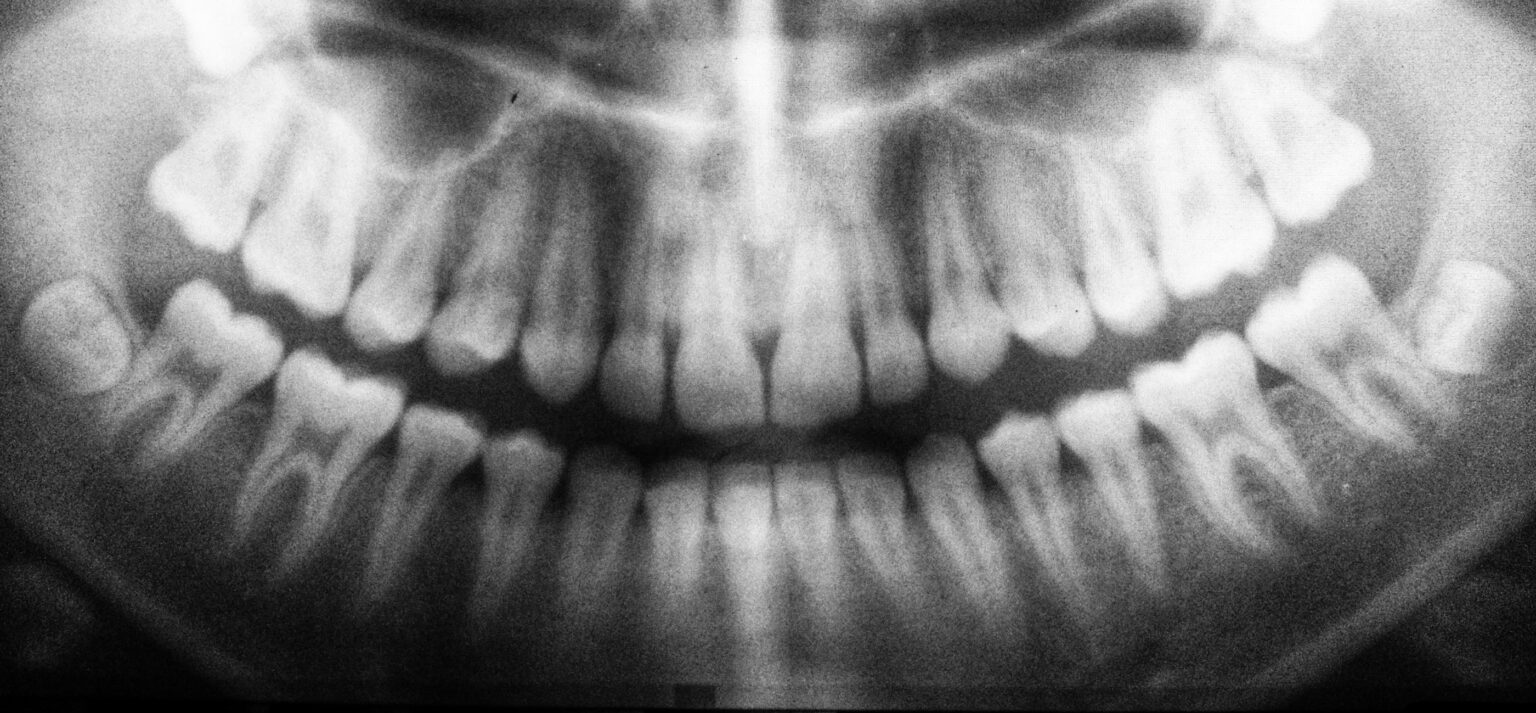
I have seen this concern often in practice settings. Someone had beautifully aligned teeth at sixteen, then by twenty-two the lower incisors looked slightly overlapped. Around the same period, a panoramic X-ray showed wisdom teeth pressing sideways under the gums. To the patient, and sometimes even to family members, the explanation felt obvious. The back teeth must be pushing everything forward like books on a shelf.
Human jaws, though, do not work like a straight row of dominoes. Teeth are held in bone, suspended by periodontal ligament, shaped by bite forces, soft tissue pressure, growth changes, and long-term wear patterns. Crowding is rarely caused by a single simple force. It is usually a result of several factors acting gradually over time.
Lower front teeth, in particular, tend to become a little more crowded with age in many people, including some who never develop wisdom teeth at all. Orthodontists have observed this for decades. Retainers are prescribed after braces for a reason. Teeth are not naturally committed to staying perfectly lined up forever.
What crowding really means
Dental crowding happens when there is not enough room for teeth to sit in ideal alignment within the arch. That can show up as rotation, overlap, teeth that sit too far forward or inward, or a smile that seems compressed. Some crowding starts early because the jaw is small relative to tooth size. Some develops after baby teeth are lost in a certain sequence. Some follows orthodontic relapse. Some appears gradually as the bite changes and the tissues around the teeth exert small but steady pressure.
When patients say their teeth are crowded, they often mean one of two things. They either mean the front teeth look crooked, or they mean the back of the mouth feels jammed and uncomfortable. Those are different problems, and wisdom teeth affect them differently.
If the concern is visible crowding in the front teeth, wisdom teeth removal alone is unlikely to fix it. If the concern is a lack of room for erupting wisdom teeth themselves, then removal may absolutely help by preventing repeated inflammation, gum pockets, food trapping, or damage to the second molars.
That is a subtle but important distinction. Wisdom teeth removal can help with crowding of the wisdom teeth. It does not reliably solve crowding elsewhere.
What the evidence suggests about wisdom teeth and front-tooth crowding
Research over the years has not supported a strong cause-and-effect relationship between wisdom teeth and lower incisor crowding. Studies have compared people with wisdom teeth, impacted wisdom teeth, erupted wisdom teeth, and no wisdom teeth at all. The differences in late lower front crowding have generally been small or inconsistent. In practical terms, that means a person can develop crowding with wisdom teeth, without wisdom teeth, after extraction, or without ever needing oral surgery.
That may sound frustratingly vague, but medicine often works that Oxnard Dentistry Wisdom Teeth Removal way. Not every appealing theory survives contact with better data.
This does not mean wisdom teeth are harmless. It means their role in front-tooth crowding is probably overstated. The more reliable reasons to recommend extraction tend to be local problems around the wisdom teeth themselves. Those include recurrent pericoronitis, which is inflammation around a partially erupted tooth, decay in the wisdom tooth or the tooth in front of it, cyst formation, poor cleaning access, and root damage or bone loss affecting the neighboring second molar.
In other words, the wisdom tooth may be a problem without being the cause of your crooked lower front teeth.
When wisdom teeth removal does make sense
A healthy treatment plan starts with the actual condition of the third molars, not a general fear of future crowding. There are many situations where extraction is reasonable and sometimes strongly advisable.
A partially erupted lower wisdom tooth is a classic example. It may create a flap of gum that traps food and bacteria. Patients often describe a cycle: soreness for a few days, bad taste, swelling, difficulty opening wide, then a period of calm before the next flare. That pattern can repeat for months or years. If imaging shows the tooth is unlikely to erupt into a clean, functional position, removal usually solves more problems than it creates.
Another common scenario is a wisdom tooth that leans into the second molar. The patient may not feel much at first, but X-rays can reveal decay or bone loss on the back of the second molar. That is a poor bargain, keeping a hard-to-clean third molar if it places a much more valuable neighboring tooth at risk. The second molar does the heavy chewing and is far easier to preserve for life if the wisdom tooth is not compromising it.
There are also orthodontic cases where removal is part of the broader plan. Not because extracting wisdom teeth straightens front teeth by itself, but because leaving them in place may complicate future movement, retention, or eruption patterns. Here, coordination between the orthodontist and oral surgeon matters more than folklore.
When removal is unlikely to help the crowding you can see
If you already have overlapping front teeth and no active disease around the wisdom teeth, extraction alone will not suddenly create a straight smile. The teeth do not drift neatly back into place just because space was created far behind them. Orthodontic movement does not happen that way.
I have had patients assume that once the wisdom teeth are out, their front teeth will relax into alignment over a few months. That expectation leads to disappointment. If the front teeth are crowded, the corrective tools are usually orthodontic, such as clear aligners, braces, or in some cases enamel reshaping or carefully planned extractions elsewhere in the mouth. After alignment, retention becomes the long game. A well-fitted retainer often matters more than what happened with the third molars.
This is one of those moments where the right treatment can still be the wrong answer to the wrong question. Removing problematic wisdom teeth can be beneficial. Expecting that surgery to resolve visible crowding is usually unrealistic.
Age matters, but not in a simplistic way
People often hear that wisdom teeth should be removed young because recovery is easier. There is some truth there. Younger adults, especially in the late teens to early twenties, often heal faster and may have less dense bone and less fully formed roots than older adults. That can make surgery more straightforward in selected cases.
Still, age alone should not drive the decision. A healthy thirty-five-year-old with symptom-free wisdom teeth in a clean, functional position may not need surgery at all. A seventeen-year-old with repeated infections and a severely angled impacted tooth may clearly benefit from early removal.
The timing question is better framed this way: what are the teeth doing now, what is the realistic risk they will cause trouble later, and how difficult would treatment become if you wait?
Those answers come from an exam and imaging, usually a panoramic X-ray and sometimes a cone beam CT if the roots seem close to the nerve or sinus. They do not come from age-based rules or blanket statements.
Crowding after braces, the issue many patients care about most
Patients who had orthodontic treatment in childhood or adolescence often worry most about relapse. They remember the time, the cost, and the discipline of braces or aligners. Seeing one lower incisor twist again can feel personal.
In these cases, wisdom teeth become an easy target for blame. Sometimes they are present, sometimes impacted, and the story writes itself. But relapse after orthodontics is common for reasons that have little to do with third molars. Teeth have memory only in the poetic sense. The periodontal fibers around them can contribute to rotational relapse. The bite changes over time. Growth continues in subtle ways. Retainers are lost, worn inconsistently, or stop fitting and get left in a drawer.
If you had braces and now notice crowding, the most productive next step is not to assume the wisdom teeth caused it. The productive step is to have both issues assessed separately. Ask whether the wisdom teeth are healthy and manageable. Then ask what options exist to correct the alignment and how to maintain it. Those are related discussions, but they are not the same discussion.
What a good evaluation should include
A proper assessment for wisdom teeth and crowding goes beyond a quick glance in the mouth. The clinician should look at the eruption pattern, the health of the gums around the area, the condition of the second molars, the angle and depth of any impacted teeth, cleaning access, symptoms, and the overall orthodontic picture.
This is also where nuance matters. A mesioangular impacted lower wisdom tooth, meaning it leans forward, often behaves differently from a vertically erupted one with enough room to clean. Upper wisdom teeth can create their own set of issues, especially if they over-erupt because there is no opposing lower tooth to bite against. That can lead to cheek biting, gum irritation, or difficult-to-clean spaces.
The patient’s own history matters too. Repeated swelling, bad taste, jaw stiffness, headaches from clenching during episodes of pain, and trouble cleaning the area all add weight to the decision. So do practical concerns such as whether the patient is about to start intensive orthodontic treatment, leave for military service, move abroad, or enter a period when access to care will be limited. Dentistry lives in real lives, not in ideal textbook timelines.
The trade-offs of surgery
Wisdom teeth removal is common, but it is still surgery. That should keep the decision grounded. When extraction is clearly indicated, the benefits often outweigh the downsides. When the indication is weak, the burden of proof should be higher.
Typical short-term issues include swelling, soreness, limited opening, bruising, and several days of modified eating. Many people return to desk work or school quickly, but not everyone bounces back in forty-eight hours. Lower impacted teeth tend to be the bigger recovery than simple upper extractions. Dry socket, while not inevitable, is miserable when it occurs. Infection, sinus communication for upper teeth, and nerve irritation for lower teeth are known risks, even if uncommon.
The lower jaw deserves special mention because the roots of the lower wisdom teeth can lie near the inferior alveolar nerve. When the roots appear close on imaging, the surgical plan may need refinement. Sometimes that means a specialist referral. Sometimes it means discussing alternatives such as coronectomy in selected cases, where the crown is removed and the roots are intentionally left if taking them out would pose a higher nerve risk. That is not routine for everyone, but it shows how individualized this decision can be.
A balanced conversation includes both sides: what happens if the tooth stays, and what the patient accepts by removing it.
What patients usually experience after removal
Recovery depends on how the teeth sit, how much bone covers them, the patient’s age, health, smoking status, and adherence to aftercare. A fully erupted upper wisdom tooth that comes out simply can be a very different experience from a deeply impacted lower third molar removed with bone removal and sectioning.
For most healthy patients, the rough arc is familiar. The first day feels numb and strange. Days two and three often bring the most swelling. Soft food, hydration, and keeping the area clean without being aggressive are the practical priorities. By the end of the week, many people are substantially better, though full tissue healing takes longer. Bone remodeling continues quietly after the visible healing is done.
What patients sometimes do not expect is how much better an irritated area can feel once a chronically inflamed wisdom tooth is gone. People who have dealt with repeated gum flares often describe the change less as dramatic pain relief and more as background peace. Food stops packing in that corner. The jaw stops feeling tender every few weeks. Brushing gets easier. That quality-of-life improvement is real, even if it has nothing to do with straightening the front teeth.
If crowding is the main problem, what actually helps?
When the central concern is alignment, treatment should address alignment directly. Depending on the case, that might mean short-course aligners, comprehensive orthodontics, slenderizing selected contact points, expansion, or in some adults a more involved restorative and orthodontic plan. The right choice depends on bite, facial support, gum health, and the amount of space needed.
Retention is the part patients underestimate. Once teeth are aligned, they need support to stay that way. A removable nighttime retainer works well for many people if they actually wear it. A bonded lower retainer can be useful in patients who are prone to lower incisor relapse, though it comes with its own maintenance needs. If someone is asking whether wisdom teeth removal will prevent future crowding, the more honest answer may be that retainers prevent future crowding far more reliably.
That answer is less dramatic than surgery, but it is closer to the truth.
Questions worth asking at your consultation
A thoughtful consultation should leave you with a clearer sense of cause, effect, and priorities. Good questions include the following:
- Are my wisdom teeth causing disease or damage right now, or is this mainly preventive?
- If I remove them, what problem are we trying to solve specifically?
- Will extraction change the crowding I already see in the front teeth?
- What are the risks of leaving them versus taking them out in my case?
- If crowding is my main complaint, what orthodontic or retainer options make the most sense?
Those questions shift the appointment away from assumptions and toward a plan.
The common edge cases
Not every patient fits the usual script. Sometimes a wisdom tooth erupts straight, functions normally, can be cleaned well, and never causes trouble. It may stay for life. Sometimes a patient is missing second molars or has unusual eruption patterns, which changes whether a third molar has strategic value. Occasionally a wisdom tooth that looked harmless at twenty becomes a problem at forty because gum support changes, mobility affects cleaning, or the patient’s dexterity declines.
Another edge case involves severe crowding elsewhere combined with eruptive pressure symptoms in the back of the mouth. In that situation, the patient may truly need both oral surgery and orthodontics, but for separate reasons. Framing the treatment honestly matters. The surgery is not the straightening tool. It is one part of making the mouth healthier and easier to manage.
Pregnancy, certain medications, clotting issues, immunosuppression, and a history of difficult healing also change the calculus. So does dental anxiety. Some patients do better planning elective surgery during a calm period of life, rather than waiting for an acute infection during exams, travel, or a major work deadline. Practical timing is not trivial. It affects outcomes and the patient’s experience.
So, does wisdom teeth removal help with crowded teeth?
It helps in a narrow sense, and it is often misunderstood in a broader one.
If the wisdom teeth themselves are crowded, trapped, inflamed, damaging nearby teeth, or impossible to keep clean, removal can absolutely help. It can reduce pain, prevent further damage, and simplify oral health over time.
If your front teeth are already crowded and you are hoping extraction will straighten them, it usually will not. The evidence does not support wisdom teeth as the primary driver of most lower front crowding, and surgery alone does not correct misalignment that is already present.
The best decisions here come from separating two questions that people often blend together. First, are the wisdom teeth healthy and worth keeping? Second, if the visible problem is crowding, what treatment actually addresses that crowding? Once those questions are handled individually, the path usually becomes much clearer.
For some people, the right answer is extraction. For others, it is monitoring. For many, it is extraction for health reasons plus orthodontic treatment for alignment. What it rarely is, despite the myth’s long shelf life, is a simple case of wisdom teeth pushing the whole smile out of line.
Oxnard Dentistry
1730 E Gonzales Rd, Oxnard, CA 93036, United States
+1 805-307-8731
FAQ About Wisdom Teeth Removal
How painful is it to remove a wisdom tooth?
Local anesthetic numbs the area during extraction. Pressure may still be noticeable; tell the dentist if you feel pain. Soreness and swelling afterward are common. Follow the pain-control instructions provided for your situation.
How long is recovery for wisdom teeth extractions?
Recovery varies with the tooth position and complexity of the extraction. Some people resume routine activities quickly, while others need several days of rest. Soreness, swelling and jaw stiffness can last up to two weeks. Follow your clinician's aftercare and activity advice.
What are the risks of wisdom tooth removal?
Possible complications include dry socket, infection, persistent bleeding and changes in sensation from nearby nerve injury. Your dentist or oral surgeon should explain your individual risks before treatment. Seek prompt dental advice for bleeding that will not stop, fever, or severe or worsening pain and swelling.